
One year ago, Victoria’s Secret was in free fall.
Since spinning off from L Brands (now Bath & Body Works) in 2021, the stock had cratered from $57 to barely $20 a share on a good day. Once the arbiter of all things sexy, with diamond-encrusted bras and winged angels, Victoria’s Secret’s brand was being buried under all things unsexy: the founder’s ties to Jeffrey Epstein, an awkward marketing pivot seen as “woke-washing,” tariffs, and a board that couldn’t stop fighting. An activist investor was beginning to encircle the board, questioning, among other things, whether the new CEO, Hillary Super, could handle running a public company.
On Tuesday, with nine days to go before shareholders voted on that board, Super delivered the verdict in its first-quarter earnings: $0.60 per share, nearly double what Wall Street expected. Net sales jumped 15% to $1.56 billion, topping guidance, and the company raised its full-year outlook by $120 million, well above street estimates.
Then the stock nearly doubled its share price, hitting an all-time high of $80 per share.
What was Super’s secret? She had to bring sexy back to everything, even the ticker, which is no longer VSCO but VSXY (“a marker of who we are today,” she wrote in an announcement).
Balancing between risque and woke
Every brand has had to keep up with the culture. But few have had the times come after them quite like Victoria’s Secret.
Rigid beauty standards defined Victoria’s Secret in the peak of its mid-aughts glory, with girls watching rows of extra-small, tanned models at the annual fashion show. But as millennials came of age and embraced a new era of body positivity, Victoria’s Secret struggled to rebrand. Their attempts—including a splashy rollout of accomplished celebrity women advisors meant to promote female empowerment—were too on-the-nose, widely dismissed as “woke-washing.” They failed to win back the shoppers who had left, and didn’t attract younger ones either.
Super has said that some of those decisions were made out of fear. “That natural human reaction is to want to stay out of controversy,” she says. Victoria’s Secret was so cautious, it stopped bragging altogether—even about being a go-to destination for bra fittings.
Super’s fix wasn’t to swing back to a narrow template of beauty. It was to be authentic. Under her guidance, the company has embraced its heritage—the glamour and spectacle—without the body-shaming. There is still a focus on diversity, but “without being performative, where we have to check every box,” she told Fortune earlier this year, “because to me that lacks authenticity.”
The results are now showing up in the numbers. The company delivered its fourth consecutive quarter of positive comparable sales, with Super citing double-digit growth in new customer acquisition—Gen-Z is buying bras! —and a move toward getting shoppers to pay full price rather than waiting for a markdown, which Super called a “promo-detox” on the earnings call.
“We are reducing promotions and markdowns and replacing promotional offers with compelling emotional messaging,” Super said. “The result is a healthier, more brand-led business.”
CFO Scott Sekella attributed the performance to “higher regular-price selling, reduced promotions, and leveraging buying and occupancy expenses, all despite tariff headwinds.”
The company also raised its full-year adjusted operating income guidance by more than $100 million, now projecting $550 million to $580 million, citing better-than-expected sales and lower tariff rates following court rulings against President Trump’s sweeping duties.
Goldman Sachs analyst Brooke Roach called it “a very strong result,” adding that the bank was “encouraged by the solid top-line performance with strength across all channels including North America stores, Direct, and International.”
The momentum traces back to a pivotal moment last October, when Super unveiled her vision at the brand’s 2025 fashion show. The show opened with model Jasmine Tookes, ethereal in gold wings, cradling her nine-month-pregnant belly, among longtime Angels like Adriana Lima and WNBA star Angel Reese. The message was unmistakable: same wings, different world.
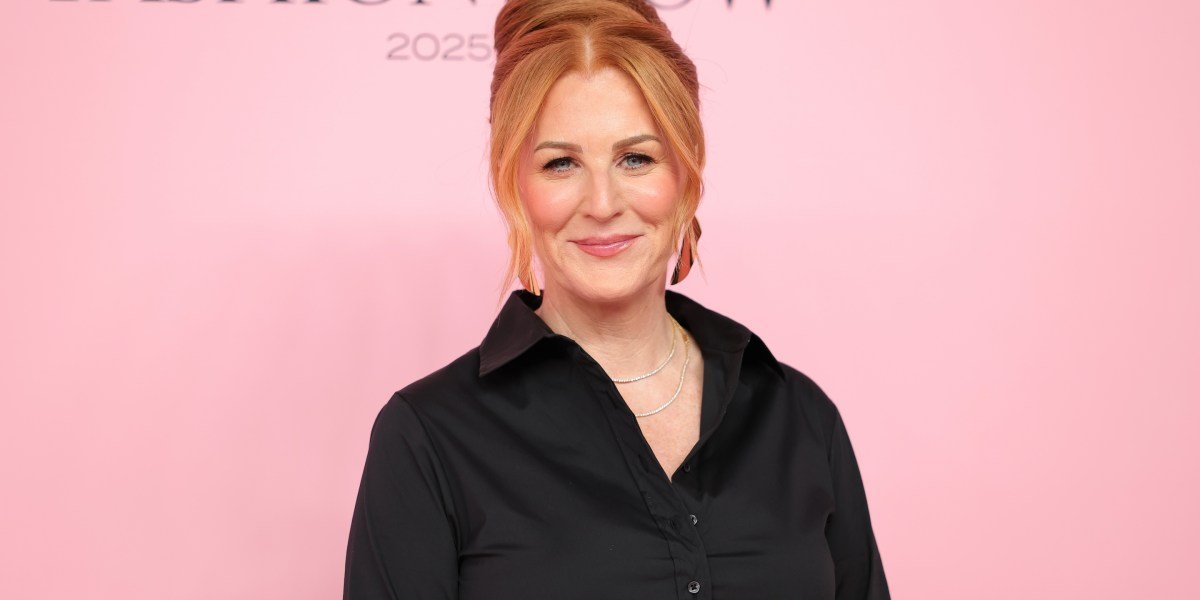
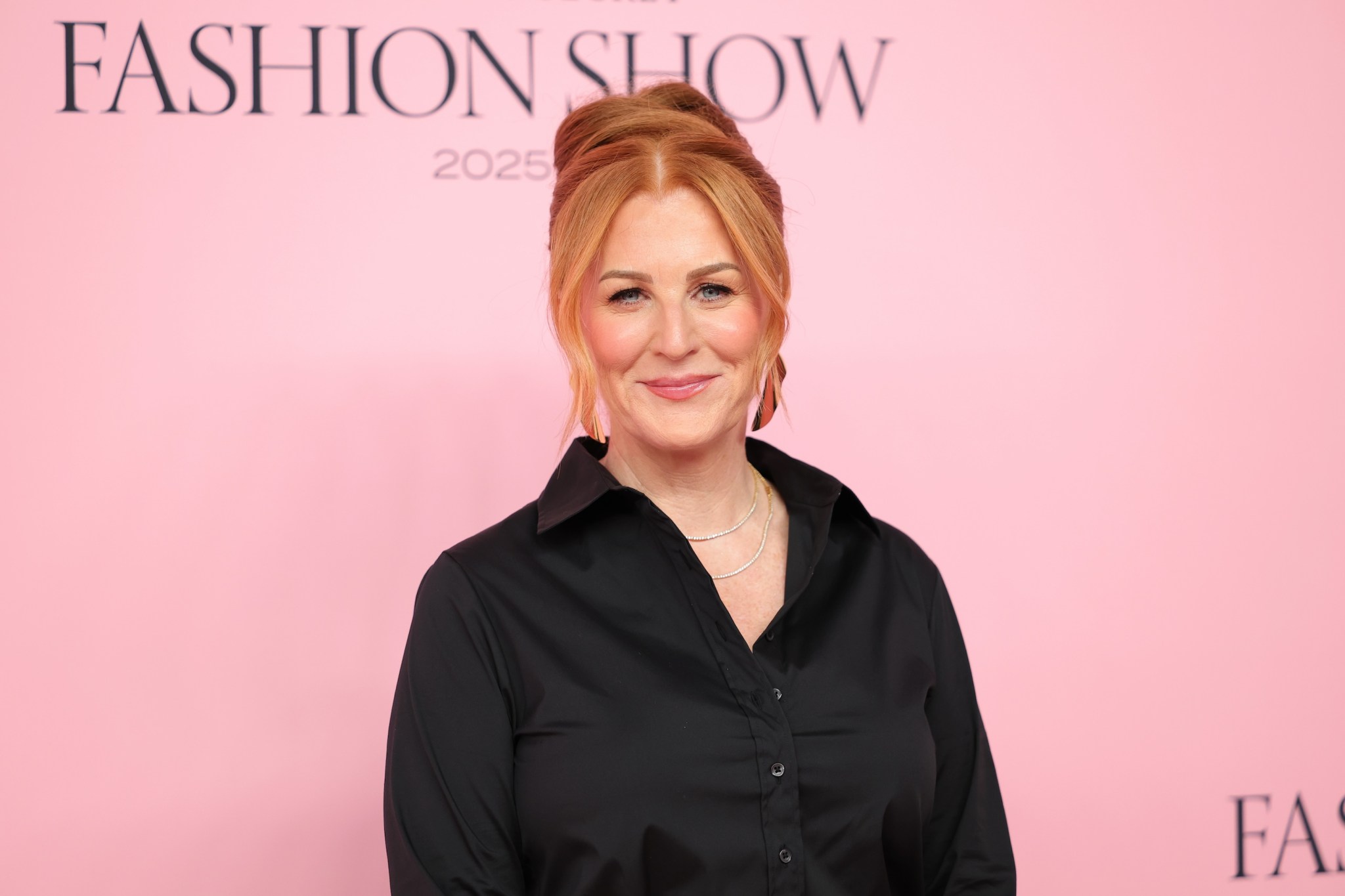
Super, a former CEO of Anthropologie and Savage X Fenty who rose through retail ranks from Wet Seal to American Eagle, is the first female CEO of the new public company. “It’s hard to have an intuition about a category that you cannot put on your body,” she says.
On the earnings call Tuesday, Super noted that her executive team has now been together for roughly a year. “Once you hit that year, you start compounding your contributions,” she said. “We are early innings.
The turnaround still faces headwinds. Victoria’s Secret sources and manufactures across several countries, including Vietnam and Sri Lanka, and faces a $90 million net tariff impact. And Super has been locked in a battle with activist investors who circled while the stock was down, with one directly objecting to her leadership, arguing she had limited public-company experience. Tuesday’s blowout quarter may be her most effective rebuttal yet.
She has otherwise shrugged off the pressure: “You have to remember that none of these things are personal, that it’s business,” she says.