

Last week the Los Angeles Times reported on a surprising trend among young people. Physical media sales, DVDs especially, are experiencing a new burst of popularity. After a decade of freefall, enthusiasm among Gen Z halved a 20 percent sales decline in 2024 to just 9 percent in 2025. Stores have noticed. The Times’ Karla Gachet spoke with staff at cultural hubs like Cinefile and Vidiots to discover why 2026 is already shaping up to be their biggest year, with the latter renting a surprising 1,000 DVDs a week.
It begs the question, could this pleasant trend take hold in video games too? “I definitely notice that younger people are actually interested in seeing where the game series of today first originated,” Daniel Teixeira of the long-running Toronto indie shop A&C Games tells Kotaku. “It’s cool how some are taking such a historical approach and paying respect to the roots.”
For DVDs, it’s no mystery. There’s a perfect storm for a new fascination with physical media. Big names like A24, Criterion, and Letterboxd are fostering a new generation of cinephiles who are engaging with more than just routine tentpole blockbusters. On the other end, Netflix and other major streamers are failing to service a generation that actually cares about film. They are raising fees and playing ads, all while the relentless streaming war consolidation is tossing back catalogues into a black hole.
The vinyl revival amongst millennials was partly about fidelity, partly about prestige. The return of DVDs is about necessity. The only practical way to dependably enjoy the films you love without corporate interruption is to own them on plastic. Add in some interesting third spaces to chat with like-minded folks and mill around in and suddenly you’ve got a burgeoning new scene going.
The conditions rhyme in gaming. Mass distribution has overwhelmingly gone digital. Frustrations with curation, censorship and long-term access are as concerning here as anywhere else. The ennui from frictionless blockbuster releases is also clear. Players are picking up fewer games, and those who play the most are sticking with games released years ago. It has provoked the likes of Sony and Xbox into half-baked or shortsighted responses, like live service and AI, leading to results that will inevitably shrink both the industry and the diversity of releases, and intensify disinterest.
But there are gaping chasms between the two mediums as well. Film and music survive because of the efforts of movie houses, rental, and record shops. Games have historically thrived in permanent third spaces like stores and arcades, but those traditionally put commerce before culture. When you think of them, you think of how much, or how little, is in your wallet. Games culture has more recently thrived in competitive spaces and online file sharing sites, though digital spaces are even more precarious than real ones.
Teixeira shared these concerns. While young people are interested in exploring the past, the price point has been a barrier, making the pursuit “elitist” as a result. “I feel bad at how much they need to spend to acquire physical copies,” says Teixeira. “Ever since the pandemic, being able to collect older video games is far more difficult, particularly with whatever is most popular.”
It puts a lot of pressure on used stores, whose sellers need to respect rising prices to attract goods, even if it locks out younger fans. Correcting this negative feedback loop requires an unorthodox approach.

Diamonds in the rough
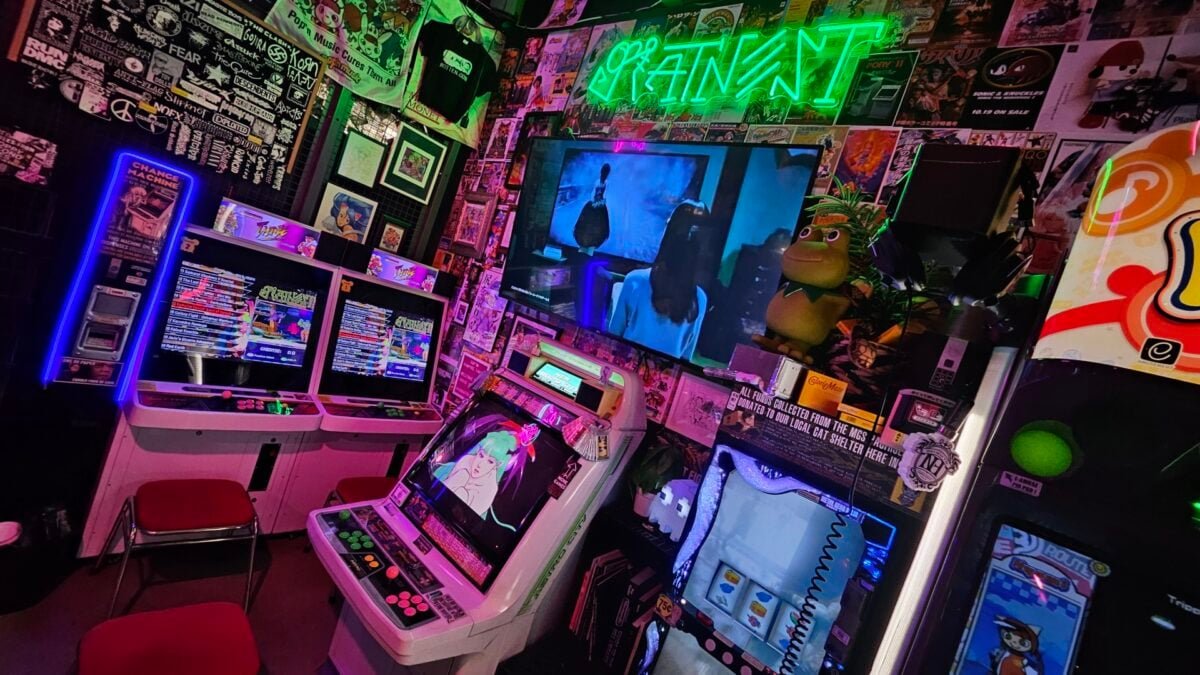
Since opening four years ago in San Bernardino County, RATNEST has also noticed the uptick in younger customers. “My younger demo has seen a significant increase,” says store purveyor Robbie Ratnest. “Especially with the kind of more obscure titles I carry involving anime, as well as the Japanese/Eastern horror, drama, tokusatsu, kaiju, etc. They’re very much looking for more than what modern media is offering for an average experience on top of it.”
RATNEST looks a little less like your traditional games store and more like a punk haunt. The original walls are lost behind a mosaic of stickers and old TV feeds. The lighting is dramatic, darkness pierced with bangs of purple and static hums. The trail of vintage games, arcade cabinets and vinyl is like a treasure hunt. Robbie tells me that after working in “far too many places that do not reflect what they claim to be about,” he wanted a space that reinforced the culture first, the cash second.
“I’m not here to make money, I make money to be here,” says Ratnest. “We generally shun those who are very outspoken about flipping games or getting them graded. Absolutely do not give a shit about that. I want these games in people’s hands who want to enjoy them.” Even if it puts his retirement in peril, he’d rather games be enjoyed than fed into another speculative asset market that overshadows the entire scene.
Last fall I hit up the Toronto Game Expo, a retro convention, at the CNE grounds. When I buy, I don’t buy for commercial value. I already own the most valuable Nintendo 64 game. I have it because I was a weird kid who fished it out of Blockbuster’s $5 bin. I buy items that speak to me. A boxed copy of Myst for the Atari Jaguar CD. A strategy guide for Shinjuku Central Park Murder Case. Virtuoso. When one vendor asked what I was looking for, I said “something interesting.” He immediately reached for his most expensive item. I respect the hustle, but it illustrates why games fail to foster themselves the way other mediums do.
Vinyl and film have their intense collectors too, obviously, but unlike in retro games they are not the norm. Likewise, even big box game stores have provided a community space. It’s no secret that GameStop can function like an after-school daycare, the former CEO even planning to install couches to help students settle in. But if you want to invest in games culture for the long haul, you’ll have to put profiteering aside.
Once upon a time home media sales were half the battle. Box office busts like Blade Runner, Fight Club and The Thing were redeemed by VHS and DVD numbers over a lifetime. We’re still a ways out from restoring that ecosystem, and industries across entertainment are more short-term-profit-motivated than ever. But if you want games for 100 years over one, if you want off the live-service ride, it will require more imaginative thinking.
“Video games provide you with pieces of your future self in a way that other media cannot,” says Ratnest. “That piece of that culture made from inspiration built upon inspiration will always overshadow the ‘collectability.’”