


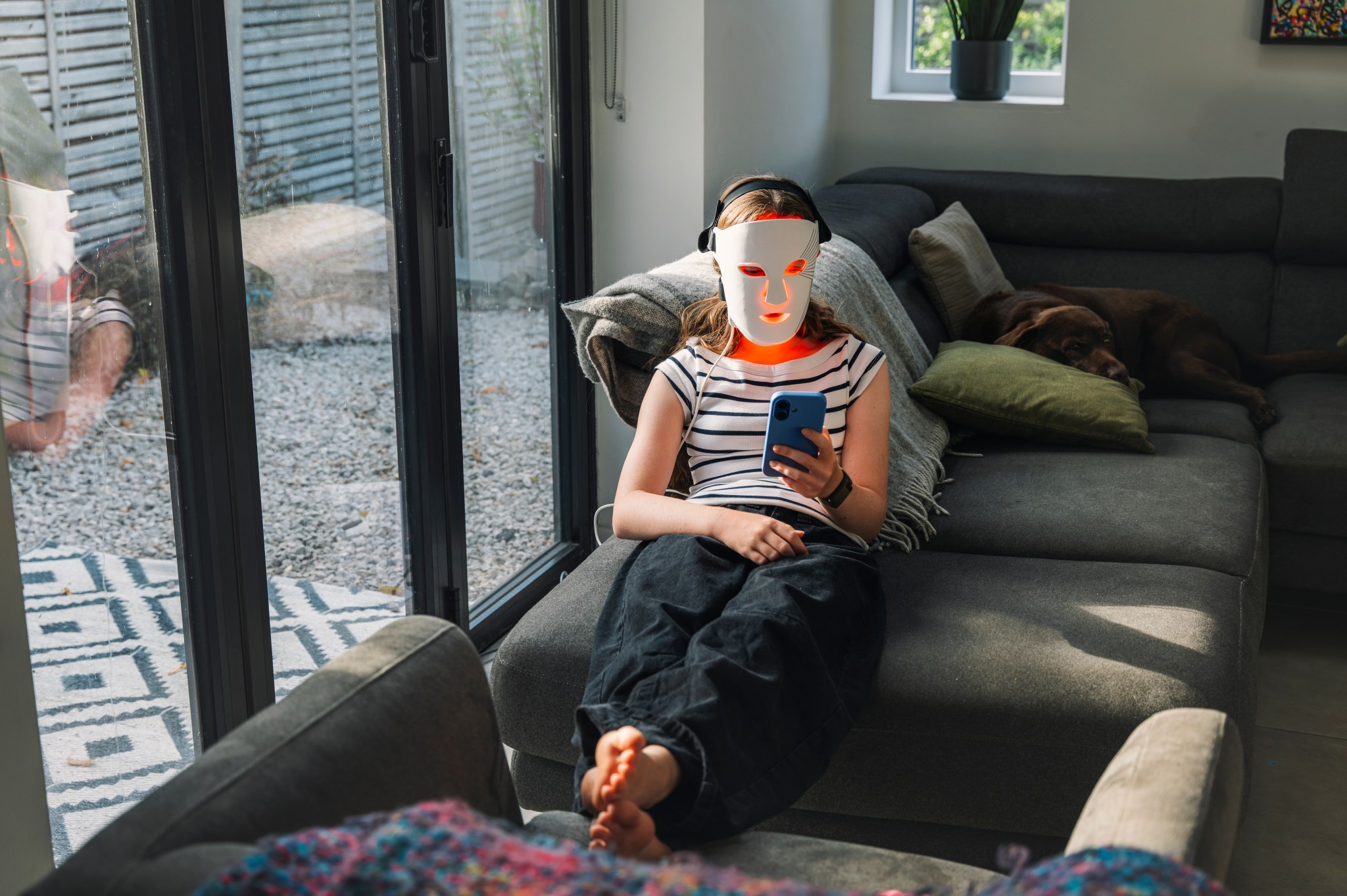
Red light therapy is gaining popularity as a tool for supporting overall wellness, from improving skin health to easing sore muscles. Social media videos of people in glowing red light therapy masks or caps may seem like science fiction, but the science behind red light therapy is real. It works by penetrating the skin with low levels of red and near-infrared light, stimulating cellular activity, and helping cells produce more energy to function more efficiently. The process may support skin healing and reduce inflammation, with potential benefits for hair regrowth, wound healing, and skin texture.
The research on red light therapy is still evolving, but findings suggest a range of potential benefits across skin care, pain management, and muscle recovery. We talked to experts, including a board-certified dermatologist, a cosmetic surgeon, and a physiatrist, about what those benefits are and who may want to add red light therapy to their routine.
What is red light therapy?
At 600-750 nanometers (nms), red light has the longest wavelengths in the visible light spectrum. Near-infrared light, which starts around 750 nms, is no longer visible to the human eye. Red light therapy, or photobiomodulation, uses red and near-infrared light ranging from 600-850 nms to penetrate skin at the cellular level. “This light works directly on the mitochondria, activating many enzymes that allow for cell turnover, cell repair, and inflammation reduction,” says cosmetic surgeon Sheina Bawa.
How is red light therapy delivered?
Red light therapy is delivered in a variety of ways, from in-office professional devices to at-home LED masks. Red light therapy delivery options include:
- Panels: These range from small, desktop panels for use at home to large, body-length panels used in clinical settings; best for systemic recovery.
- Handheld devices: Handheld wands or very small panels are ideal for applying red light therapy to a particular joint, muscle group, or wound.
- Wearable caps or hats: These can look like helmets or baseball caps and are worn on top of the head to help promote hair regrowth.
- Wearable wraps, belts, and pads: These are flexible panels that conform to the body, ideal for knee, shoulder, and back application.
- Wearable masks: Made from either soft, flexible silicone or rigid plastics, red light therapy masks treat skin texture, mild to moderate acne, and fine lines and wrinkles.
- Beds and saunas: Red light therapy beds, like a tanning bed but without the UV light, can be found in some spa or recovery centers, offering full-body exposure. For at-home use, consider the best infrared saunas for a full-body experience similar to that of a red light therapy bed.
When it comes to receiving red light therapy in the office or at home, “the trade-off is power,” says board-certified dermatologist and cosmetic surgeon Melanie Palm. “At-home devices are weaker than what we use clinically, so results take longer and tend to be more subtle.”
For those exploring at-home options, guides to the best red light therapy masks and best red light therapy panels can help compare features and user experiences. Palm asserts that consistent use of FDA-cleared devices “can be worthwhile,” especially when complementing an in-office regimen.
Palm adds that it’s important to distinguish red light from ultraviolet (UV) light. Red light “doesn’t carry the cancer risks associated with sun exposure or tanning beds, which is a big part of what makes it such a compelling therapeutic tool,” she shares.
How can red light therapy benefit your health?
According to board-certified physiatrist Benjamin Shekhtman, the benefits of red light therapy first emerged in NASA research from the 1990s. Since then, the treatment “has accumulated a meaningful clinical evidence base across sports medicine, dermatology, and rehabilitation,” he says.
Here are some of the most well-known benefits of red light therapy:
Skin Health
Red light therapy is thought to rejuvenate skin, reducing the appearance of fine lines and improving uneven texture and laxity. In one study of women who used red light therapy masks, a significant decrease in the depth of crow’s feet wrinkles was observed after three months of use. Red light therapy has also shown promise in treating acne, scarring, and redness.
Reduced Inflammation
There’s a good deal of clinical evidence to show that red light therapy reduces inflammation throughout the body, making it a potentially useful treatment for inflammatory conditions like arthritis, muscle soreness, and post-surgical healing.
Muscle Recovery
A 2025 review of studies showed red light therapy to be an effective intervention for delayed onset muscle soreness, with a demonstrated ability to reduce pain, enhance muscle strength, and even prevent muscle damage. Many physical therapists are incorporating red light therapy to help improve circulation and promote athletic recovery.
Hair Regrowth
“For hair loss, the picture is promising,” Palm says. Red light therapy boosts circulation and blood flow, which brings nutrients to the scalp to stimulate new growth. That said, people experiencing hair loss will typically need consistent red light therapy sessions for at least three months to notice reduced shedding. Visible improvements in hair density often take six months or longer. “Consistency is crucial,” says Palm, “and combining red light therapy with other treatments recommended by a board-certified dermatologist may enhance results.”
Wound Healing
Near-infrared therapy was found to offer benefits for wound healing and post-operative pain in a 2026 review of studies. In the past few years, many hospitals and clinical settings have added red light therapy for this purpose.
Treatment outcomes for any red light therapy application will vary depending on the type of red light therapy you receive, including the device type and the intensity. “Red light in the 630–700 nms range is well-established for its anti-aging and healing properties,” Palm says, adding that “near-infrared light, which falls between 760 and 1,400 nms is similar to red light but penetrates deeper, making it especially effective for wrinkles and skin laxity.”
Is red light therapy right for you?
There’s a reason red light therapy has gained popularity: it’s non-invasive, well-tolerated by most people, and can help treat a host of conditions, with applications in dermatology, physical therapy, and even surgical recovery. As Bawa explains, “Red light therapy is considered safe and effective and can be used by nearly everyone.” Ideal candidates are people who want to be proactive about their health by addressing early signs of aging, calming inflammatory skin conditions like acne or rosacea, supporting post-workout recovery, or just increasing overall wellness.
Still, red light therapy is not a magic bullet or a one-size-fits all treatment. Experts like Palm and Shekhtman point out that certain individuals should be cautious about using red light therapy or avoid it altogether. If you have a history of skin cancer or have photosensitivity (from medication or a condition like lupus), be sure to talk with your doctor before beginning red light therapy. The same is true for people who are pregnant, have epilepsy, or have had a recent injury or diagnosis.
In many cases, red light therapy is a safe and helpful tool for promoting healing and reducing inflammation.
Is red light therapy safe?
The experts we spoke to agree that red light therapy has a strong safety profile when used as directed. “Misuse is where things can go wrong,” Palm says. She adds that “high-intensity exposure or using a device more frequently than directed can cause temporary redness, irritation, or in some cases, blistering. Eye safety is also important. Always follow the device instructions regarding eye protection, as red light can cause damage if directed at unprotected eyes.”
While red light therapy is generally considered safe, potential side effects may include:
- Eye strain or damage if proper eye protection is not used
- Temporary skin redness or warmth, though this usually resolves within hours
- Hyperpigmentation or a worsening of melasma in people with darker skin tones
- Overstimulation or insomnia for people who use red light therapy too close to bedtime
- Burns, though rare, are possible with laser-class devices or prolonged and improper use of high-intensity panels
Red light therapy shows promising results in supporting skin health, reducing inflammation, and helping muscles to recover. Like any popular wellness trend, though, red light therapy treatment should be approached with realistic expectations and professional guidance.
FAQs
Is red light therapy safe for everyone?
While red light therapy is generally considered safe and is well-tolerated by most people, consult with your doctor first if you are pregnant, have a history of skin cancer or are living with cancer, have hyperpigmentation or melasma, or are sensitive to light due to medication or a condition like lupus.
Does red light therapy actually work?
Studies show that red light therapy, which uses low wavelengths of red and near-infrared light to penetrate skin on the cellular level, can be effective for reducing inflammation, improving overall skin health, and promoting healing.
Can red light therapy help with acne?
In many cases, yes. Red light therapy has been shown to reduce inflammation, calm redness, and accelerate wound healing, all factors that contribute to acne outbreaks.